Motor Model
Motor Model Overview
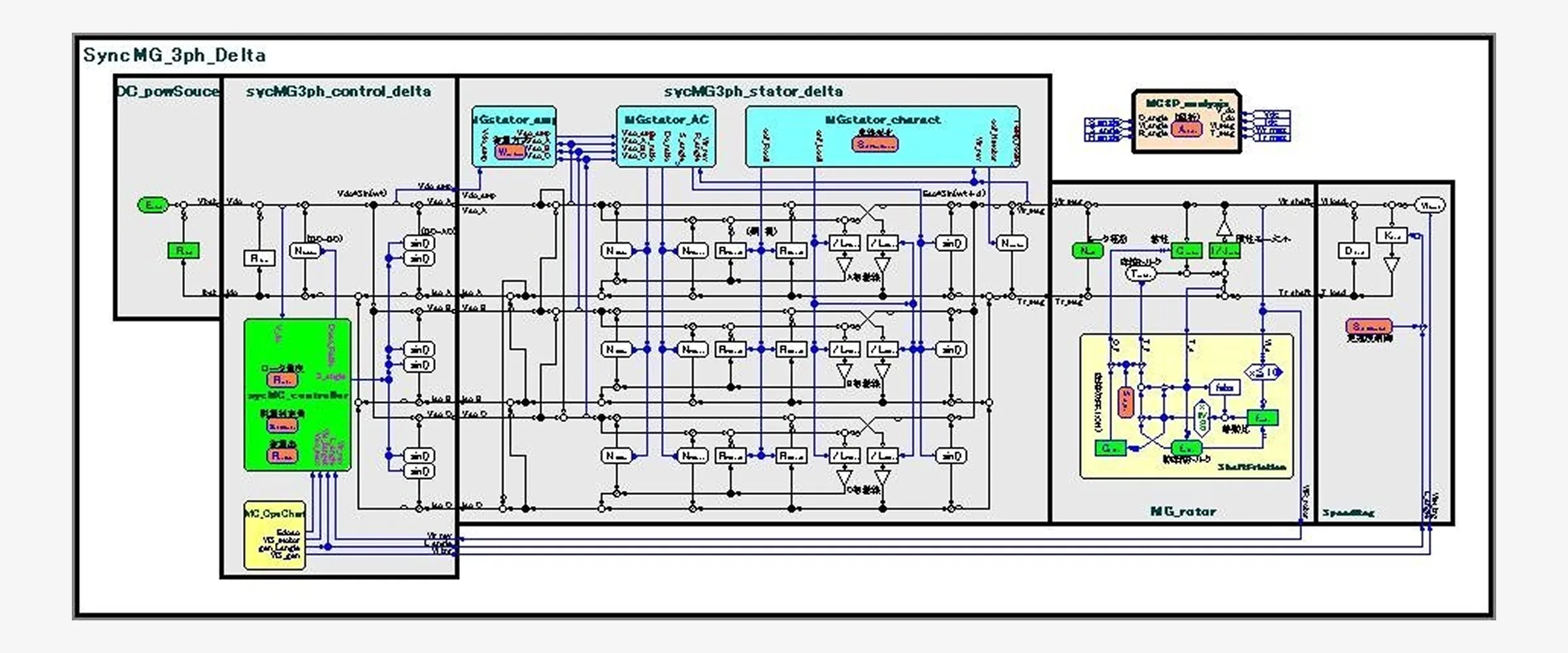
Catec's motor model not only considers the input/output characteristics of the motor, but also has an energy-balanced model structure that allows for the creation of models for motor development and design that take into account iron loss (hysteresis), windage loss, motor constants, armature resistance loss (copper loss), friction loss, input voltage pulsation, etc.
It has the following features:
It has the following features:
- You can develop models that allow you to verify everything from the actual motor structure to changes in characteristics and observed state variables.
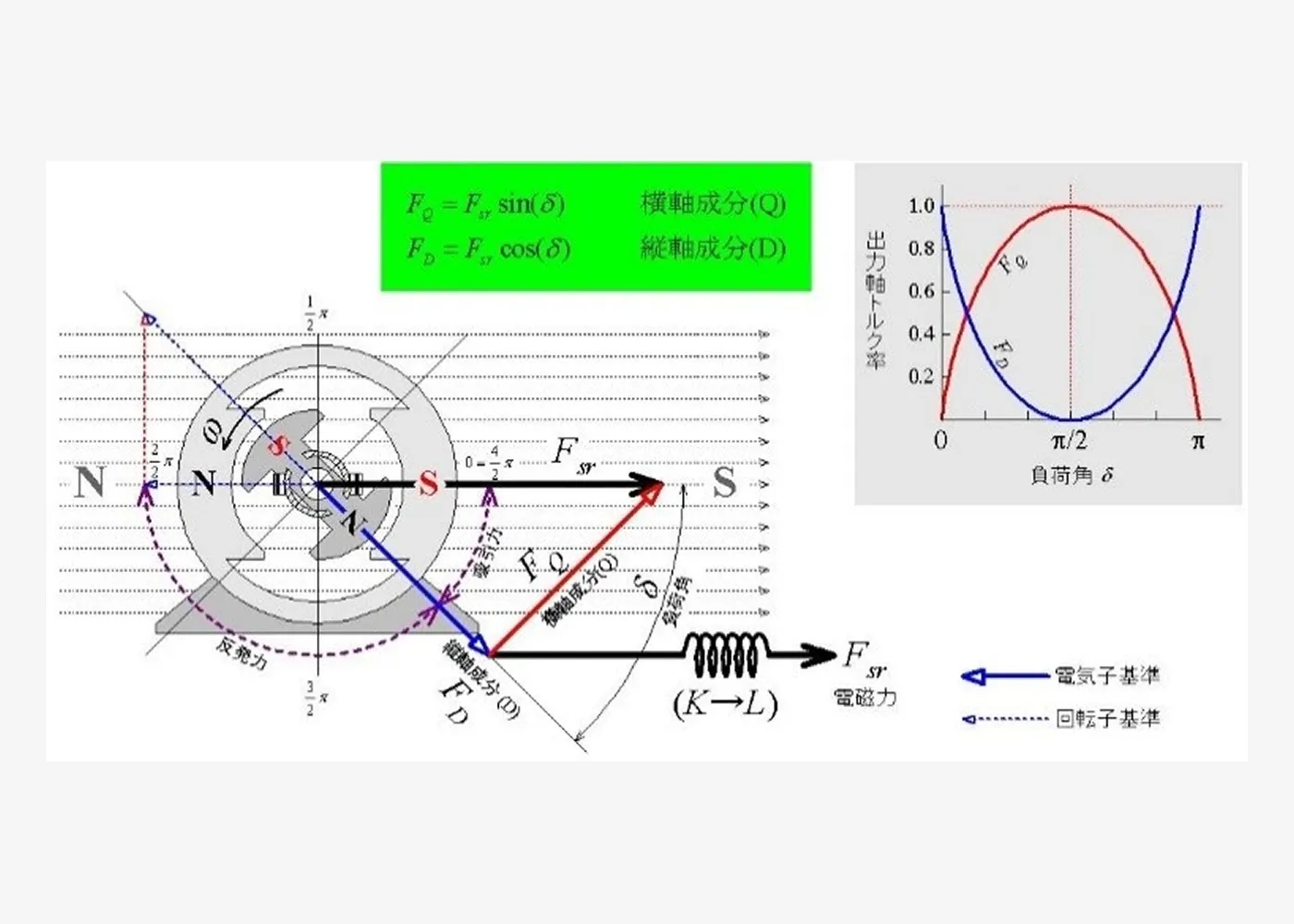
- The original idea for representing motor current and voltage using the dq method is the two-action theory, and by using a two-action method that includes vector calculations in system design, a model close to the actual motor is constructed.
- The motor model has functions such as braking and power generation in addition to rotational output due to voltage application, and it is possible to create motor models that can reproduce these functions.
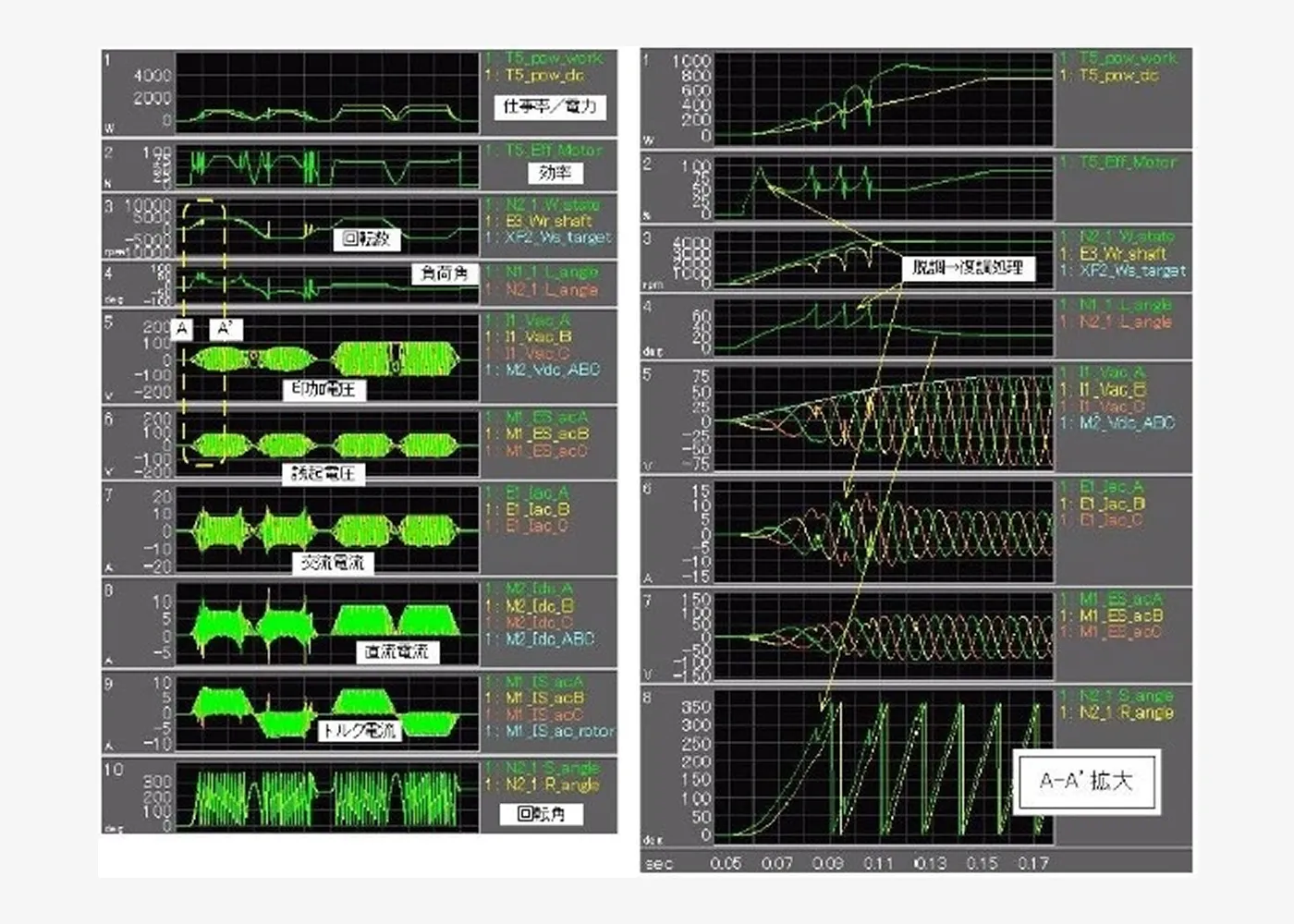
- Reproducible models are possible using experimental data. Internal characteristics can be understood by freely placing observation points within the model, such as impedance and loss element parameters, load angle characteristics, and rotational efficiency.
- The customer's proprietary technologies, including their features and methods, can be incorporated as nonlinear elements. These elements can be experimental data or nonlinear processing programs.
- Models used in the planning and development phases can be proposed, and the same model diagrams can be shared between the design and experimental departments.
Motor Model Example
Motor Model Example
System Structure