
Model Building Tool VT Modeler
What is the Model Building Tool
VT Modeler?
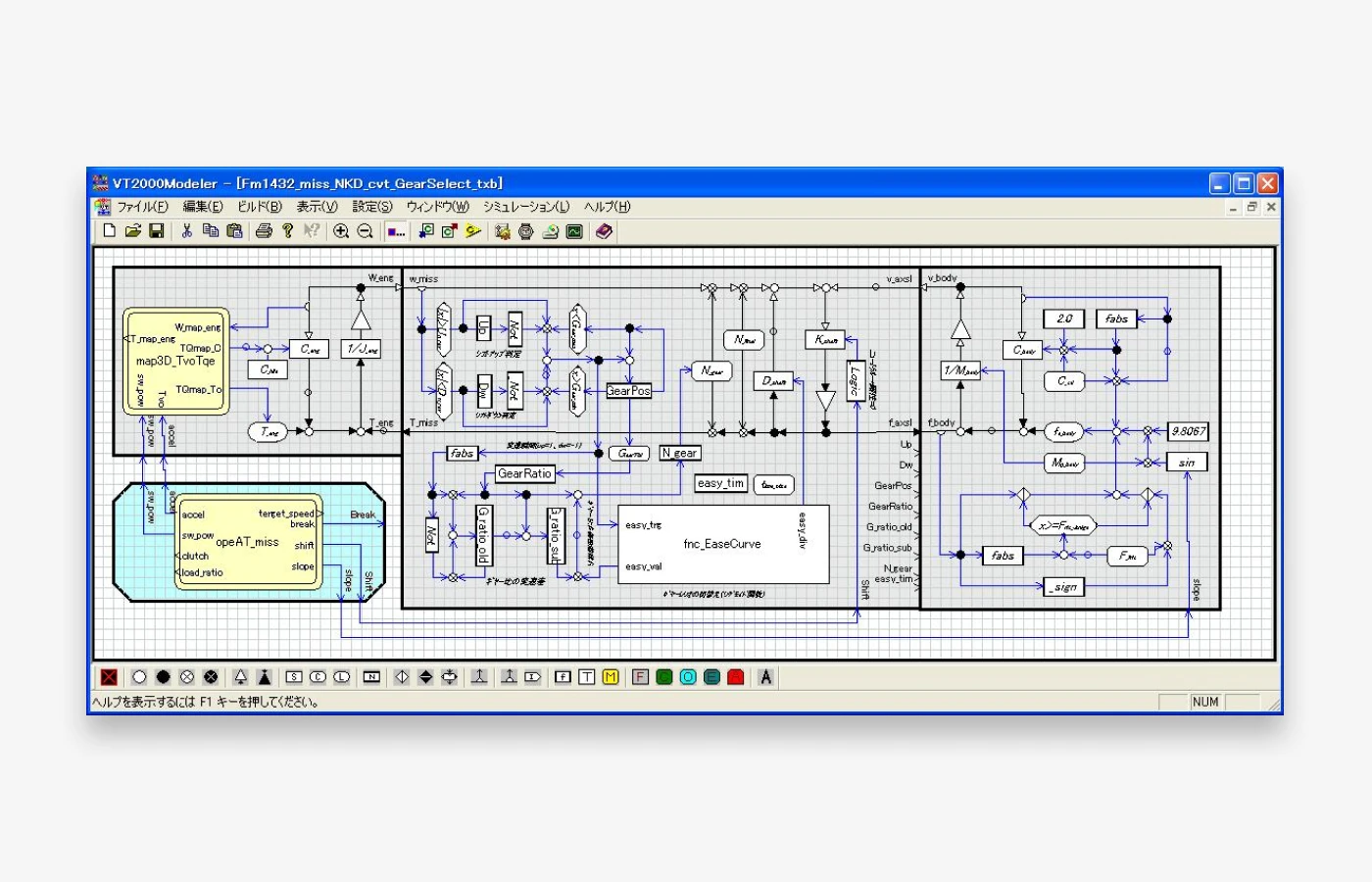
Main Analysis Contents
- Creation and simulation of vehicle models
- Creation and simulation of motor models
- Vibration models
- HiLs&Sils
About Physical Function Models
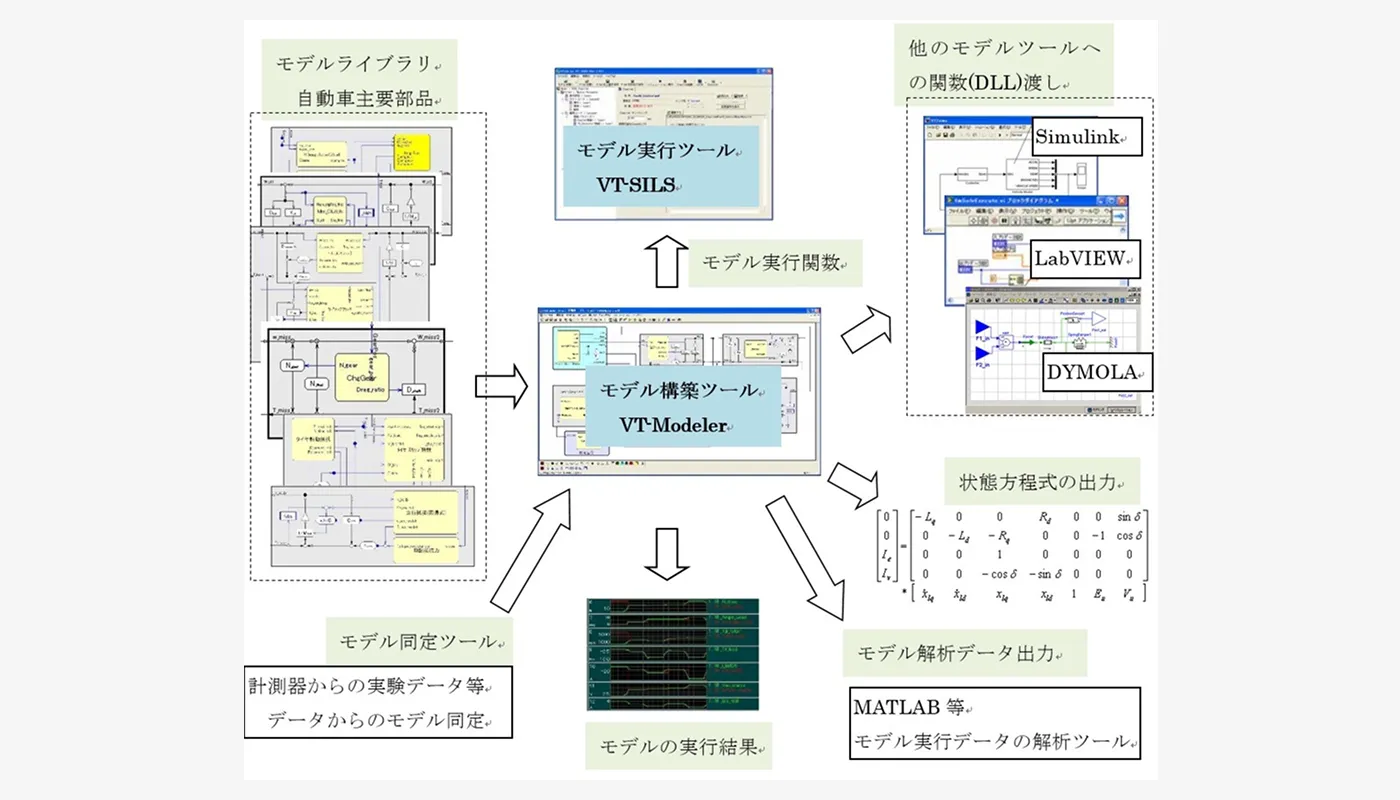
The physical function model, a new modeling method, focuses on the functions and energy flowing between parts within a product. VT Modeler is a tool that realizes model construction in a graphical environment based on this theory, and it can automatically set the energy input/output flow as paired terminals.
Model Construction Not Constrained by Engineering Fields
Functional models are a method of creating physical models according to physical laws such as electricity, mechanics, fluid dynamics, and thermodynamics, and then running simulations based on them. Physical models from different engineering fields can be assembled using a common theory.
Flexible Handling of Nonlinear Elements
Output of State Equations
Model Construction Using Combinations of Basic Elements
Model construction allows for the construction of many linear models by combining basic elements. These basic elements include mass, viscous loss, elasticity, plasticity loss, force source, velocity source, and coefficients. When constructing a product model, models are created for each component that makes up the product, and the overall product model is created by assembling these components.
Solid Motion and Solid Deformation
Representing Stationary, Steady, and Transient States
Physical Functional Models
Automotive Model
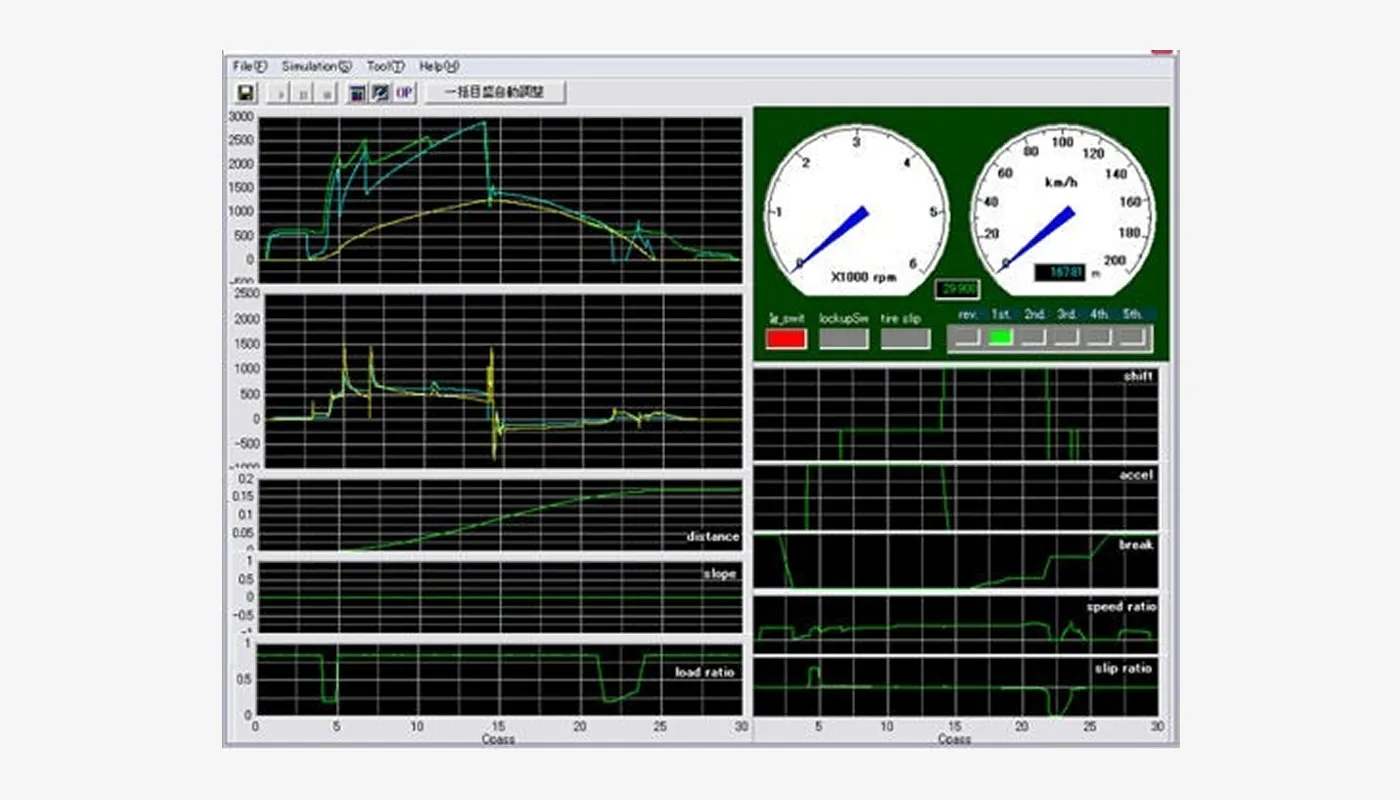
Motor Model
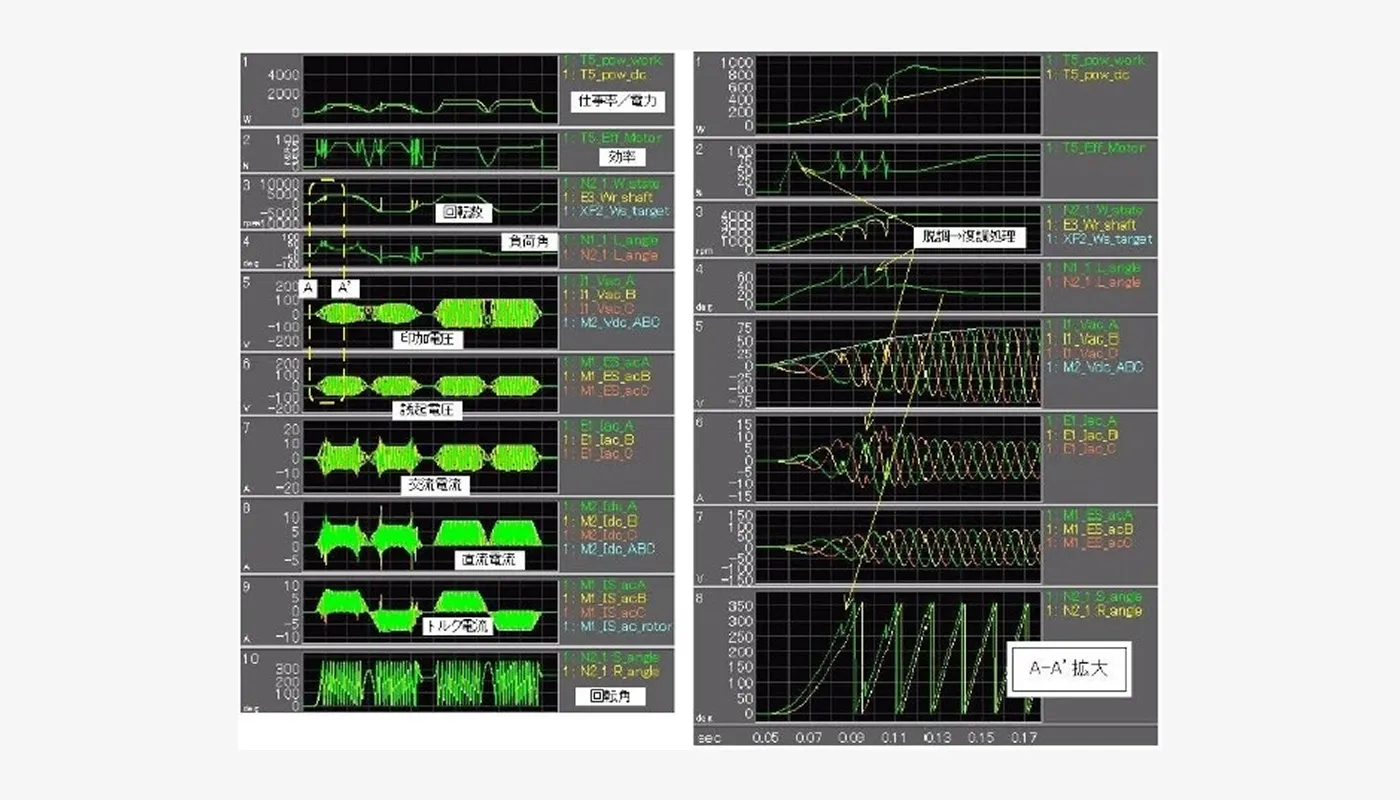
Vibration Model
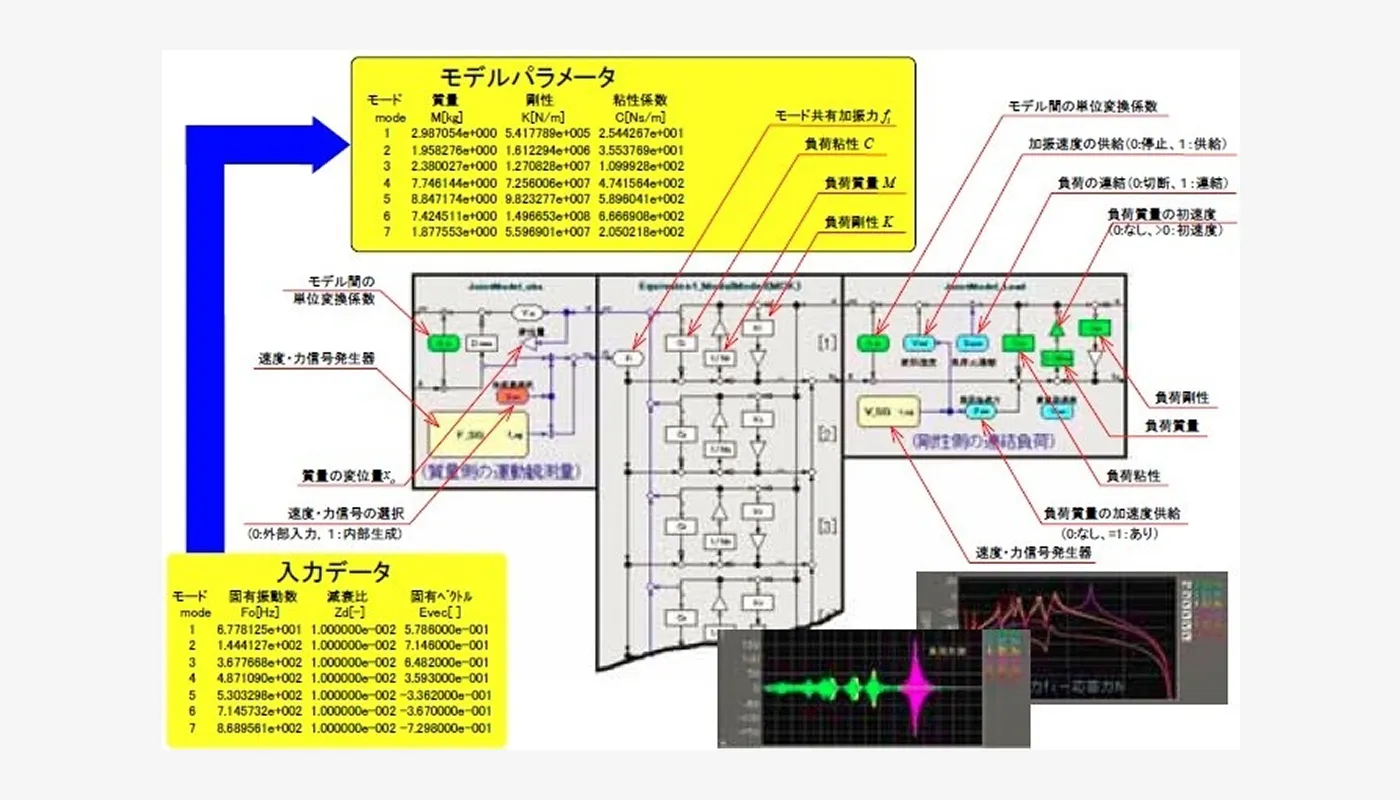
HILS & SILS
View Product Information
- Vibration/Noise Measurement and Analysis System
CAT System Pro / CAT System - Sound Quality Evaluation and Analysis System
CAT SQ - Modulation frequency analysis system
CAT FS - Time-series data acquisition system
CAT DATA Logger - Time-based waveform data display and analysis tool
State Analyzer - Sound source color mapping software
CAT AR - Vibration/Noise Comparator
CAT-CMP - Road Noise Measurement System
CAT PASS-BY NOISE - Field Balancing System
CTA-FB - Gear Noise Measurement & Judgment System
GearNoise Test System - Acoustic Measurement System
CAT-PWL - Model building tool
VT Modeler - Sound source visualization using acoustic holography
SORAMA - Handheld multi-function spherical microphone array
SONOCAT - Sound Source Location System
Acoustic Camera Nor848B